
What type of landscape lighting is best for my yard?
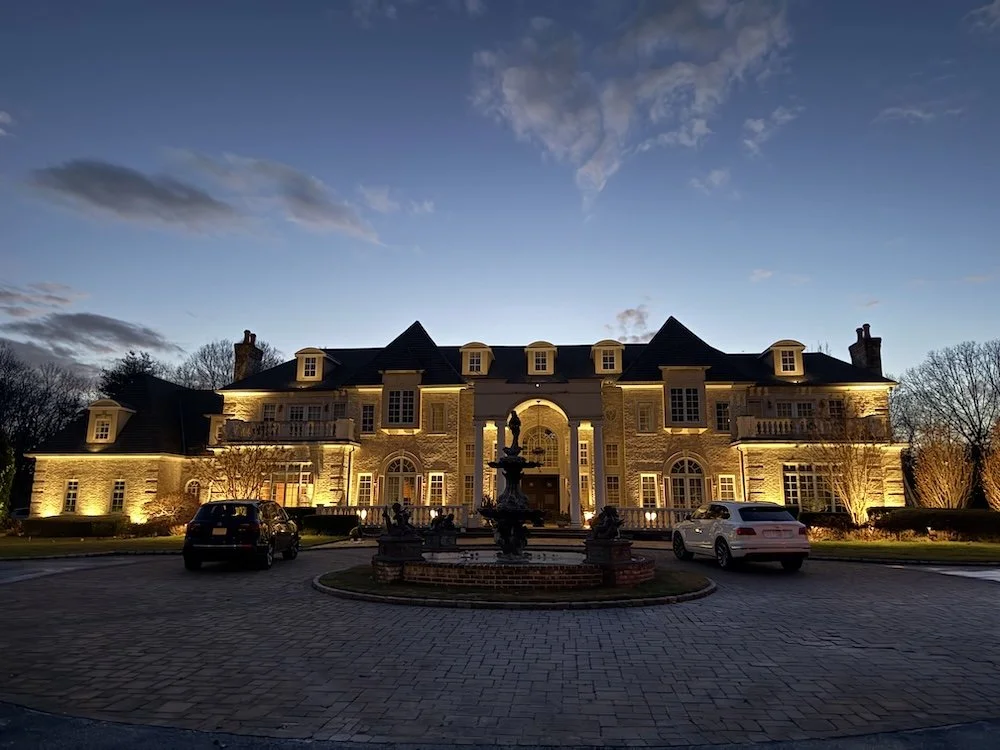
Location: Oyster Bay, NY.
Landscape lighting is one of the most powerful ways to enhance a property after dark. It goes beyond aesthetics – proper lighting improves safety, emphasizes architecture, highlights landscaping, and extends the use of outdoor spaces into the evening. Yet, deciding which type of lighting is best for a yard is not always straightforward. Homeowners face countless options: path lights, uplights, downlights, spotlights, mini-spotlights, and more. Choosing without a clear plan can result in uneven illumination, wasted energy, or an outdoor space that feels cluttered or unnatural.
A successful outdoor lighting design requires a balance of artistry and technical expertise. The right combination of fixtures, placement, intensity, and layering can transform a yard into a cohesive, elegant environment. This article explores practical strategies for determining the best lighting for a yard, technical insights for large properties, and a real-world case study of a château-inspired estate in Oyster Bay, NY, where a phased landscape lighting project showcased the transformative potential of a professional design approach.
Assessing your yard’s outdoor lighting needs
Every property is unique, and outdoor lighting should reflect the space, architectural style, and the way residents use the yard. While aesthetics are important, functionality and safety cannot be overlooked. Most properties require a mix of lighting for different purposes:
Driveway and walkway lighting: Provides safe navigation after dark, reduces trip hazards, and creates a welcoming first impression.
Landscape feature lighting: Highlights flowerbeds, shrubs, ornamental trees, and garden sculptures.
Tree lighting: Adds vertical interest, depth, and drama, using uplighting, downlighting, or a combination for sculptural effects.
Architectural lighting: Showcases columns, façades, rooflines, and decorative details.
Outdoor living area lighting: Illuminates patios, lounge areas, fire pits, and entertaining spaces.
Step and elevation lighting: Ensures safety on stairs, slopes, or uneven terrain without compromising the design.
Understanding the priorities for a property allows a lighting designer to create a plan that is both functional and visually harmonious. For expansive or complex properties, a phased approach can be particularly effective, allowing homeowners to focus on essential areas first and expand the lighting over time.
Case study: Château-inspired estate in Oyster Bay, NY
To illustrate these principles, consider a recent project at a château-inspired estate in Oyster Bay, NY. This residence is among the most distinguished in its area, defined by scale, symmetry, and exceptional craftsmanship. By day, the property commands attention with its grand façade, manicured gardens, and perfectly aligned tree rows. However, as evening falls, even homes of this caliber can fade into darkness without a well-planned lighting strategy.
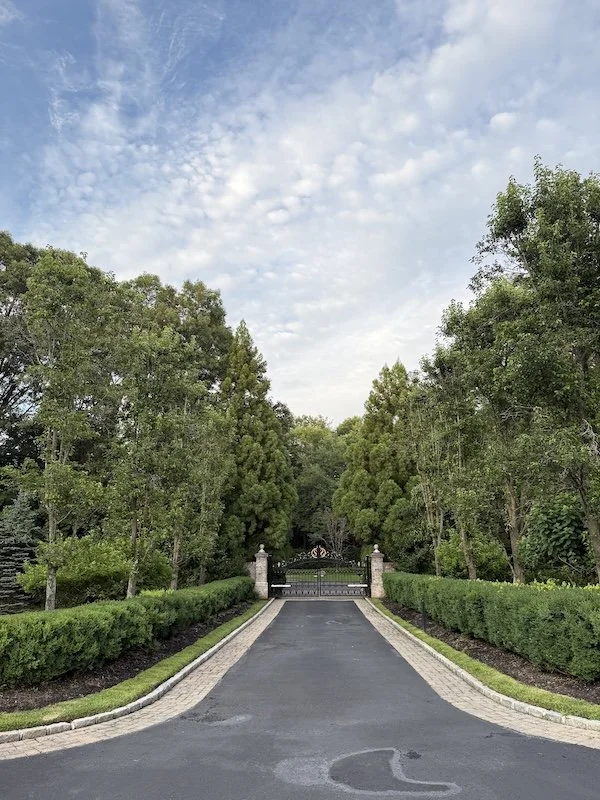
The property presented a significant challenge: a long driveway lined with mature trees, extensive landscaped gardens, and a large, multi-level home with intricate architectural details. The lighting design was divided into three phases, ensuring that the most critical areas were illuminated first, followed by enhancements that emphasized the landscape and architecture in layers.
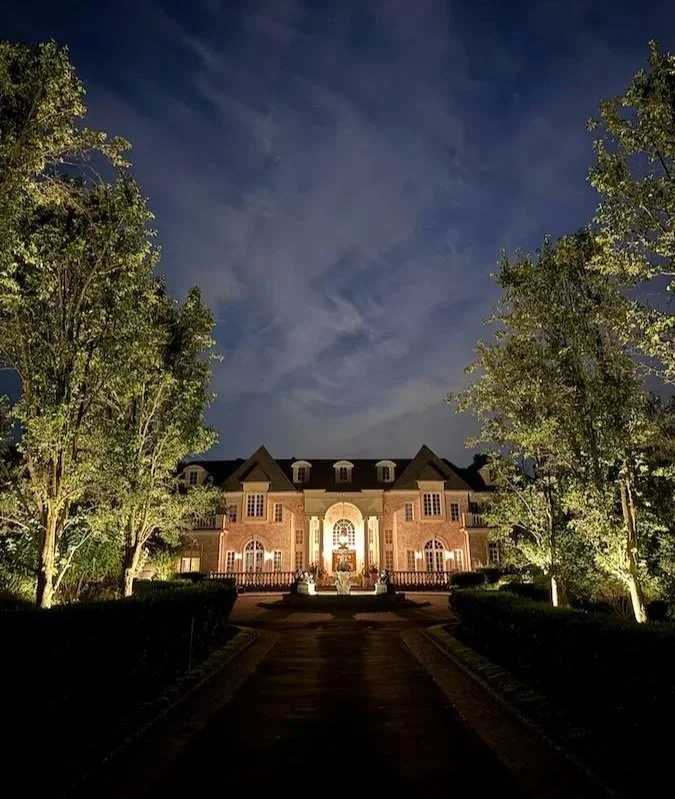
PHASE ONE: Driveway, walkway, and key landscape features lighting (July)
The first phase focused on areas that impacted safety and visibility while showcasing the property’s most striking landscape features. Installations included:
Low-voltage LED path lights along the flowerbed and primary walkways. These provided guidance for evening navigation while blending seamlessly with the landscape.
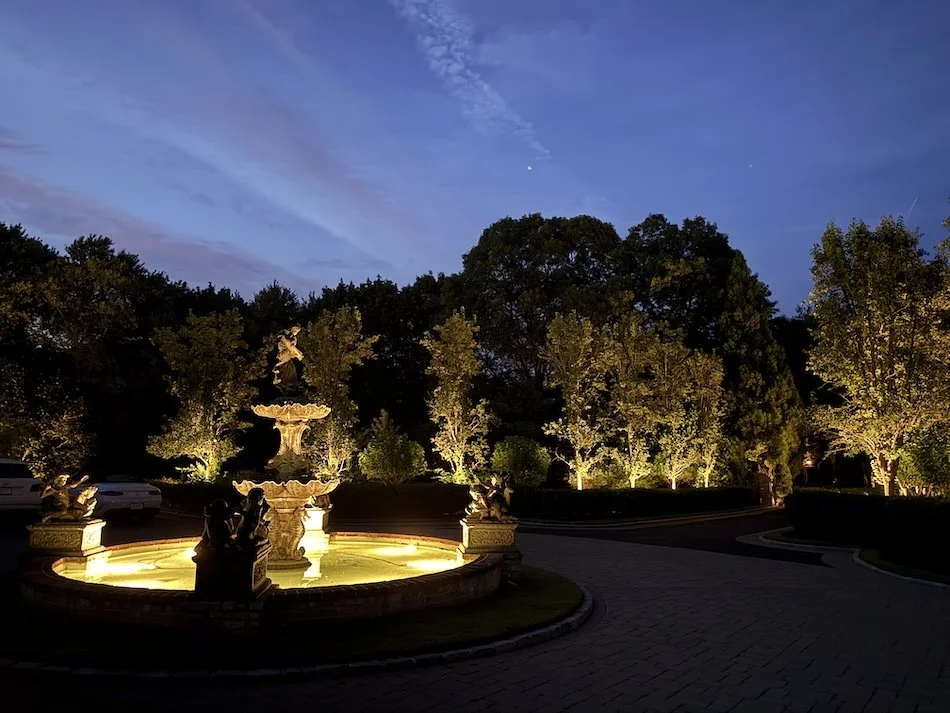
Tree uplighting to accentuate vertical structures and the long driveway lined with mature trees, create drama, and add depth to the grounds.
Downlighting from larger trees, simulating natural moonlight and balancing the uplights.
Spotlighting for garden features, highlighting select flowerbeds and sculptural elements.
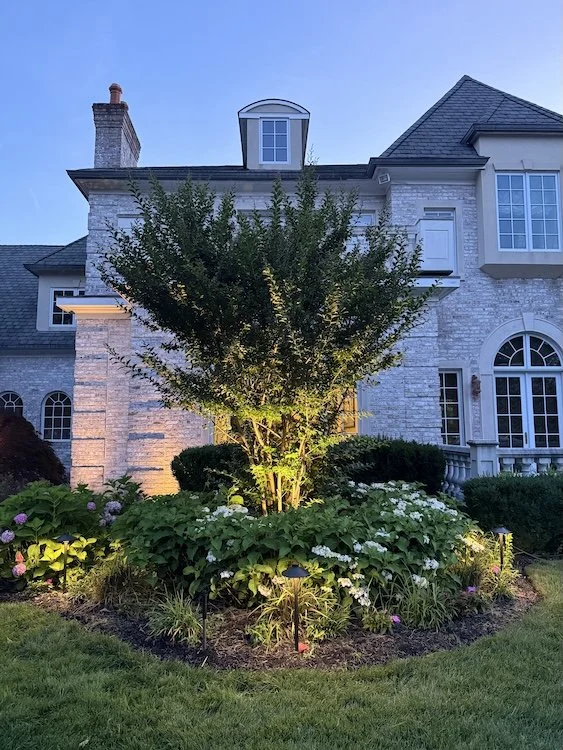
Path lights and spotlights for the garden features.
The scale of the estate required careful planning. Each fixture was positioned to complement its surroundings, avoid glare, and create a cohesive look across the yard. Layering was essential – over-illumination can flatten the visual experience, while subtle layering enhances depth, shadow, and artistic appeal.
PHASE TWO: Expanding tree and garden illumination (September)
After experiencing the impact of the first phase, the client requested additional landscape lighting to enhance other trees and garden areas. This phase focused on visual continuity and layering:
Additional uplighting was installed on secondary trees to create rhythm across the property and highlight the breadth of the landscape.
Strategic spotlights accentuated select shrubs and garden details, ensuring every element contributed to a unified visual story.
Layering principles guided the placement, intensity, and angle of each fixture to maintain balance and avoid over-lit areas.
This phase demonstrates an important principle: less is more. Even on expansive properties, restraint is critical. Lighting every tree or feature equally can diminish the sense of depth, while selective emphasis creates drama, balance, and sophistication.
PHASE THREE: Architectural and exterior lighting (November)
By November, the property’s landscaping had naturally diminished due to seasonal changes. Shrubs, flowerbeds, and greenery were less prominent, leaving the home’s architectural features as the primary focal points. The third phase concentrated on illuminating the house itself:
Spotlights and mini-spotlights were used to accentuate rooflines, decorative elements, and smaller ornamental structures, often referred to as doghouses.
Low-voltage LED fixtures provided long-lasting, energy-efficient illumination for façades, columns, and exterior details.
Integration with prior phases ensured a seamless transition from driveways, walkways, and gardens to the home itself, maintaining consistent layering and balance.
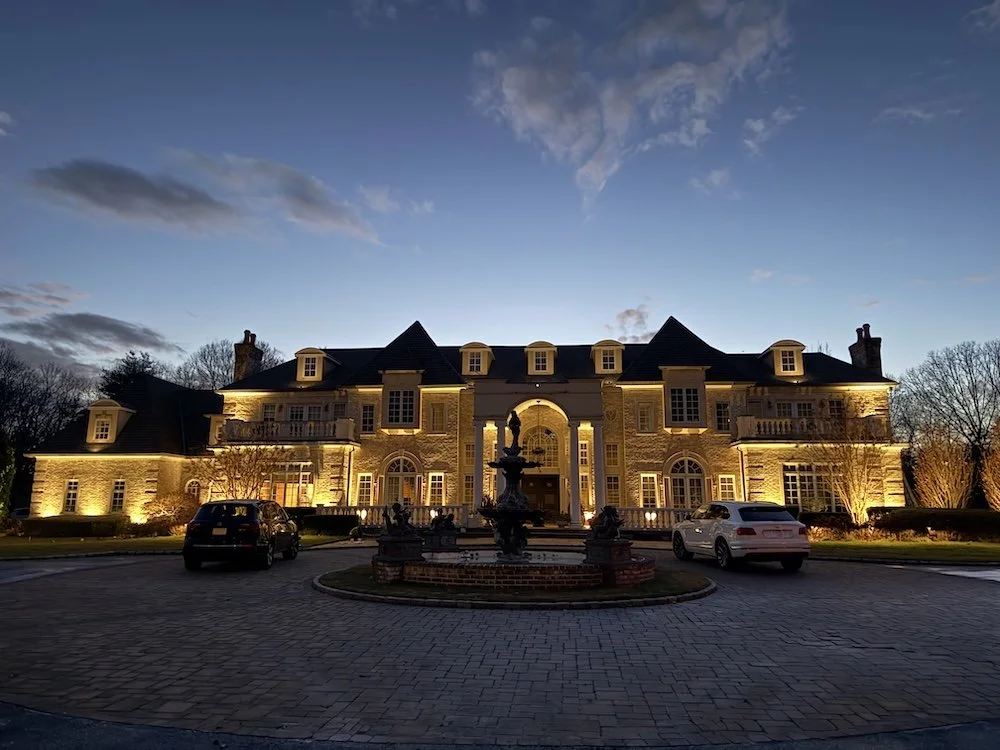
This phase illustrates a crucial aspect of landscape lighting: seasonal adaptation. As plant life recedes, lighting must shift focus to preserve curb appeal, highlight key features, and maintain safety. Professional designers account for these seasonal changes to ensure the property remains striking throughout the year.
Techniques and fixture selection
Selecting the right fixtures is just as critical as placement. For large estates, a mix of techniques and high-quality fixtures ensures a professional, polished result:
Low-voltage LED lighting: Energy-efficient, long-lasting, and ideal for residential properties.
Uplighting: Draws attention to trees, vertical structures, and garden features.
Downlighting: Provides a moonlight effect for lawns, patios, and pathways.
Path lights: Enhance walkways, driveways, and garden paths without overpowering the space.
Spotlights and mini-spotlights: Highlight architectural details, rooflines, and unique elements.
The combination of these fixtures, applied in layers, creates depth, contrast, and a natural, elegant ambiance.
Challenges in landscape lighting
Large properties present unique challenges that require experience and technical knowledge:
Balancing light intensity: Uneven lighting can flatten features or create glare. Accurate spacing, beam angle, and fixture selection are critical.
Managing client expectations: Homeowners may request illumination for every element. Designers must educate clients on selective lighting to preserve balance and artistic integrity.
Technical complexities: Large estates require precise wiring, fixture placement, and attention to how different materials and surfaces reflect light.
These factors highlight why professional landscape lighting services are essential for high-end properties. Expertise ensures long-lasting results, aesthetic coherence, and safety.
Key considerations for choosing landscape lighting on Long Island, NY
For homeowners evaluating the best type of lighting for their yard in Nassau County and Suffolk County on Long Island, several principles are critical:
Prioritize essential areas: Driveways, walkways, outdoor living areas, and standout landscape features should be addressed first.
Layer the lighting: Combining uplights, downlights, spotlights, and path lights adds depth, shadow, and dimension.
Use energy-efficient fixtures: Low-voltage LEDs provide long-term savings, flexibility, and reduced environmental impact.
Consult professional designers: Every home is unique. A custom design avoids costly mistakes and ensures a balanced, visually appealing result.
Adapt for seasonal changes: Plant growth, flowering cycles, and dormant periods should inform fixture placement and lighting focus.
Why professional landscape lighting matters
DIY installations or inexperienced contractors often miss the subtleties that make a lighting design truly cohesive. A professional team considers:
How light interacts with architecture, landscaping, and terrain.
Where shadows should remain to preserve depth and contrast.
How to integrate safety, aesthetics, and energy efficiency seamlessly.
In the Oyster Bay estate, the phased approach ensured driveways glowed safely, trees appeared sculptural, and architectural features were highlighted without creating a harsh, artificial effect. The result was a harmonious, layered landscape lighting design that elevated the property’s nighttime presence while maintaining functionality and visual elegance.
Conclusion
Choosing the right type of landscape lighting for a yard goes beyond fixture selection. It requires strategic planning, a thoughtful approach to layering, and an understanding of both architecture and landscaping. Well-executed lighting enhances curb appeal, frames architectural details, illuminates pathways, and creates outdoor spaces that can be enjoyed long after the sun sets.
Professional design ensures a tailored solution for any property, whether a modest suburban home or an expansive estate. A phased, layered approach, combined with high-quality low-voltage LED fixtures and expert placement, creates a visually striking, long-lasting, and energy-efficient result.
For homeowners seeking the most effective, functional, and visually appealing landscape lighting, consulting a professional designer is the most reliable way to achieve a balanced and impactful installation. Properly planned landscape lighting allows every property to shine safely, elegantly, and seamlessly – no matter the season.
If you have any questions or need assistance with landscape lighting services for your property, we're here to help. We offer professional design and installation services on Long Island, NY (Nassau County and Suffolk County), and the surrounding areas. Contact us today and we’ll connect you with one of our expert lighting designers to discuss your needs and provide a custom design proposal for your home.