
What should I consider when hiring a landscape lighting contractor on Long Island?
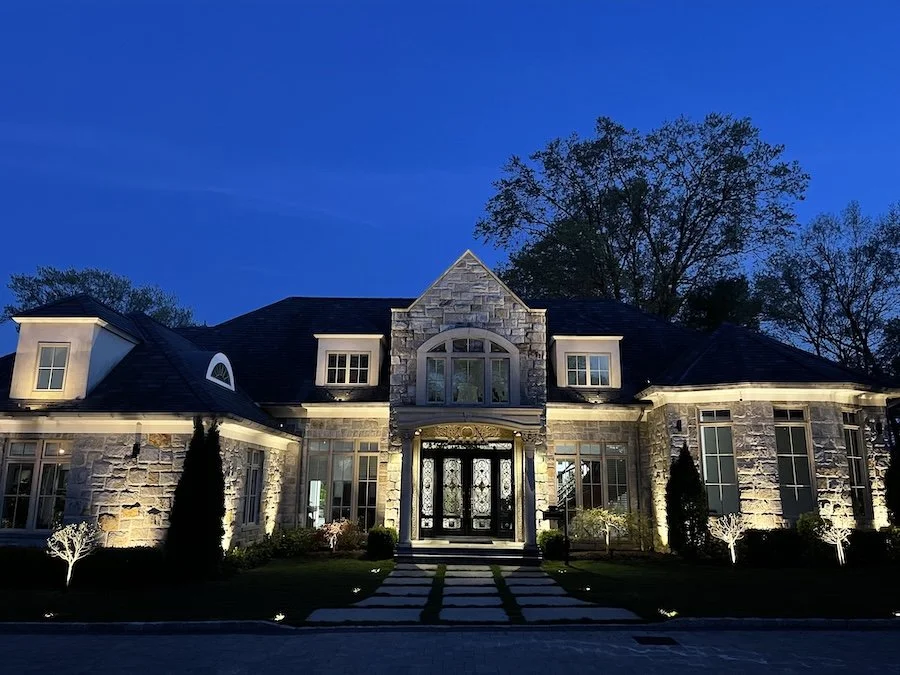
Location: Albertson, NY.
Most homeowners think about landscape lighting after the fixtures go in, not before. The assumption is usually simple: add a few lights, highlight the landscaping, brighten the pathways, and the property is done.
Then night comes. A home that looked completely finished at 3 PM can suddenly feel like something is missing a few hours later.
In Garden City, driveways lose their definition and turn into simple stretches of darkness. In Roslyn, mature trees that anchor a property during the day reduce to soft silhouettes with no depth. Even carefully maintained homes across Nassau County can lose their structure the moment daylight disappears.
Nothing about the property changes.
Only the light does.
And that’s usually when homeowners begin to notice something they hadn’t considered before: how a home is experienced after dark is largely determined by its outdoor lighting.
That’s where the real gap begins between installing landscape lighting and actually designing it.
Across Long Island, from suburban neighborhoods to waterfront properties in Great Neck, Oyster Bay, Huntington, and down through Suffolk County, that difference becomes visible immediately. Some homes feel composed and intentional at night. Others feel like familiar spaces that have quietly lost their identity.
Why landscape lighting design matters more than the fixtures you choose
It’s easy to assume that better fixtures automatically create better lighting. And while material quality and construction absolutely matter, they are only part of the outcome.
Two homes can use nearly identical fixtures and still feel completely different at night. One feels balanced and natural. The other feels uneven or visually noisy.
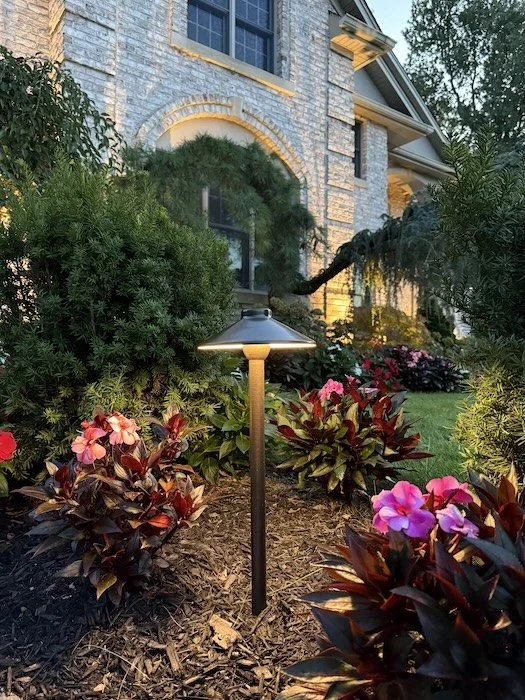
The difference isn’t in the product itself. It’s in how it’s used.
Landscape lighting design is less about placement and more about intention. It decides what should be seen first, what should support it in the background, and what should remain subtle enough that it only registers indirectly.
Without that hierarchy, even high-end systems can feel flat.
What separates a skilled landscape lighting contractor from an average installer
Design thinking vs Fixture placement
There is a clear divide between lighting that is designed and lighting that is installed.
Design-led work starts with observation – how the home sits within its landscape, how trees frame architectural lines, how movement naturally flows through the property at night.
Installation-led work starts with distribution – how many fixtures, how many zones, how to fill space evenly.
In places like Roslyn Heights or Huntington, where landscapes are mature and layered, that difference becomes impossible to miss once the sun goes down. Lighting either follows the architecture or ignores it.
Why installation quality (and materials) are invisible when done correctly
The most successful lighting work is often the least noticeable as “work.”
A recent project in Suffolk County made this clear. The homeowner had just installed premium turf and was understandably cautious about any trenching or disruption. The concern wasn’t aesthetic, it was preservation. After installation, nothing about the lawn looked altered. No lines. No dips. No visible paths of disturbance.
The reaction was simple: “You can’t even tell there were cables run across the lawn.”
That result doesn’t come from one decision. It comes from controlled excavation, careful routing, and material choices that are designed to hold up underground without failure over time. When either side is missing, technique or material quality, the system eventually shows it.
The underground reality of landscape lighting systems
What happens beneath the surface is where most long-term problems begin.
Wiring integrity, insulation quality, connector sealing, and moisture resistance all determine how a system performs years after installation. These are not details that show up in the final walk-through, but they define whether the system remains stable or begins to degrade.
Across Garden City, Huntington, and Suffolk County, this is often the hidden difference between systems that last and systems that slowly fail.
A properly built lighting system should disappear into the landscape visually, but remain structurally reliable beneath it. That balance depends as much on material selection as it does on installation discipline.
Designing outdoor lighting around how a home is actually experienced on Long Island
The view from inside the home matters most
Lighting is often judged from the outside, but most homeowners actually experience it from within. In homes across Great Neck, Roslyn, and East Hampton, the most important perspective is not the driveway or the lawn; it’s the view from inside the home looking out.
A tree that looks dramatic from the street has little value if it doesn’t contribute to the way a living room feels at night.
Lighting that ignores this ends up creating outdoor scenes that don’t connect to daily life.
Interior sightlines as the real design framework
Good outdoor lighting design starts with interior experience. It considers what is visible from key living spaces and builds outward from there.
That shift changes everything; what gets emphasized, what gets softened, and how the entire property is structured after dark.
Why depth and layering separate good landscape lighting from great lighting
Landscape lighting becomes effective when it creates structure rather than just visibility. Foreground elements define edges and form. Midground plantings introduce rhythm. Background features create scale and depth.
Without this layering, even well-executed installations in Westhampton or Oyster Bay can feel visually compressed – present, but lacking dimension.
Flat lighting is one of the most common outcomes in residential work. It happens when everything is treated equally rather than intentionally.
Strong landscape lighting allows certain elements to lead while others support.
Glare: The detail that breaks everything when overlooked
Glare is one of the most disruptive issues in landscape lighting, and also one of the easiest to underestimate.
It happens when the fixture becomes visible instead of the surface it is meant to illuminate. Once that occurs, the experience shifts immediately. The eye stops reading the landscape and starts reading the light source.
The result feels technical rather than natural.
Proper outdoor lighting avoids this entirely through placement and careful angling. Fixtures are present, but not visually dominant.
In open coastal environments like Sag Harbor and East Hampton, where darkness is deeper and cleaner, this becomes even more critical.
Why fixture materials matter more than most people realize
While design determines how a property is experienced, materials determine how long that experience lasts.
Brass fixtures are often chosen for their durability and resistance to corrosion, particularly in coastal environments across Nassau County and Suffolk County. Aluminum fixtures can also perform well, but their long-term success depends heavily on coating quality and exposure conditions.
Material selection is not a cosmetic decision. It affects aging, consistency, and system reliability over time. A well-designed system still depends on the quality of what it is built from.
Integrated LED vs Replaceable systems
Both integrated LED and replaceable bulb systems have their place.
Integrated systems reduce connection points and can improve long-term consistency when properly engineered. Replaceable systems offer flexibility and easier servicing over time.
Neither is universally better. The right choice depends on how the system is intended to function over its lifespan.
Energy efficiency and modern landscape lighting performance
Modern LED technology has significantly reduced energy demands in landscape lighting. Even larger properties across Nassau County and Suffolk County can be illuminated efficiently when systems are designed with proper spacing, beam control, and restraint.
Efficiency in lighting comes not from using less, but from using better.
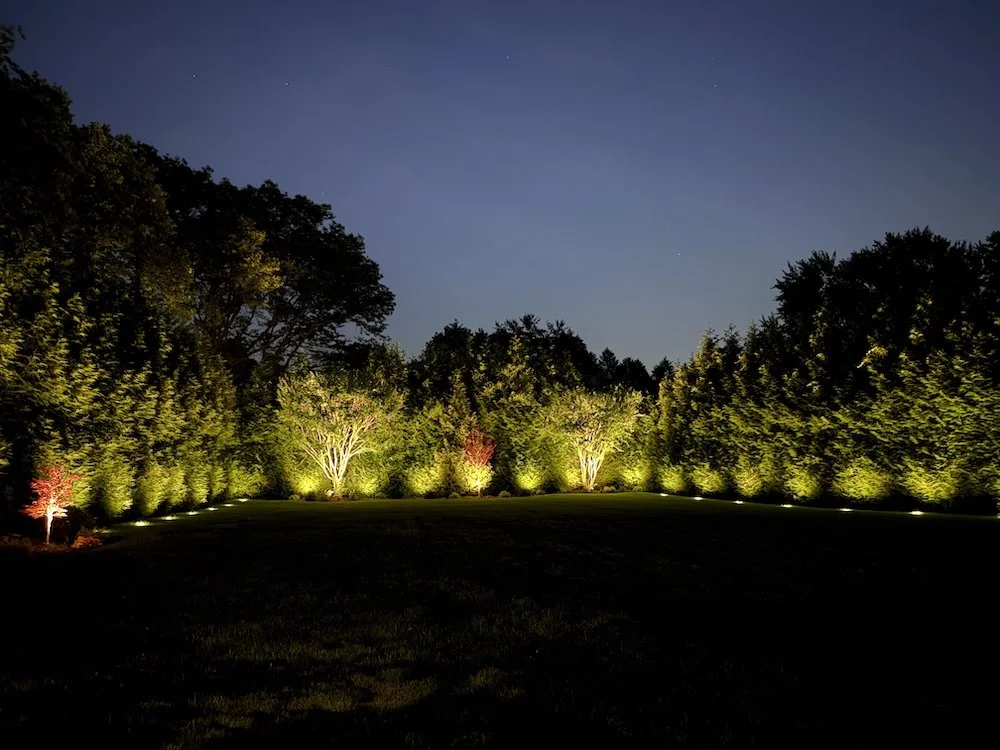
Location: Dix Hills, NY.
Designing for growth and seasonal change
Landscapes are constantly evolving. Trees mature, shrubs expand, and seasonal shifts change how light behaves across a property.
A system that feels balanced at installation can change significantly over time if that growth wasn’t considered. In areas like Garden City, Huntington, and Roslyn, where planting density increases over time, this becomes especially noticeable.
Good lighting anticipates change rather than reacting to it.
The most common long-term issues homeowners experience
Most lighting issues do not appear immediately. They develop slowly over time.
Common problems include:
Uneven lighting as plantings mature
Fixture failures from underground connection issues
Incorrect beam angles missing focal points
Undersized fixtures losing impact on larger features
Gradual inconsistency caused by lower-grade components or installation shortcuts
These issues are rarely sudden; they are the result of decisions made early in the process.
Final thought: What actually matters when hiring a landscape lighting contractor on Long Island
By the time most homeowners start comparing contractors, the decision already feels like it’s about fixtures, pricing, or timelines. But those are usually the least important parts of the equation.
What separates a strong landscape lighting contractor from an average one on Long Island is how they think before anything is installed.
It shows in the way they approach design, not as decoration, but as structure. It shows in how they treat installation, not as placement, but as precision. And it shows in how they select materials that are meant to survive Long Island conditions over time, not just look good on day one in Nassau County, Suffolk County, or coastal areas like East Hampton and Sag Harbor.
Because when lighting is done correctly, you don’t notice individual decisions anymore. You notice the result: a home that still feels like itself after dark, just expressed in a different way.
That outcome usually comes down to a few quiet but critical things working together:
A contractor who understands how a property is meant to be experienced; not just how it looks from the outside.
A system built with materials appropriate for its environment; not just its price point.
And an installation approach that respects what already exists, instead of disturbing it.
When those align, landscape lighting stops feeling like an added feature. It becomes part of the architecture.
And that is ultimately what homeowners are choosing when they hire a landscape lighting contractor on Long Island – how their home will live after sunset for years to come.
If you have any questions or need assistance with landscape lighting services for your property, we're here to help. We offer professional design and installation services on Long Island, NY (Nassau County and Suffolk County), and the surrounding areas. Contact us today and we’ll connect you with one of our expert lighting designers to discuss your needs and provide a custom design proposal for your home.